
August 8, 2026
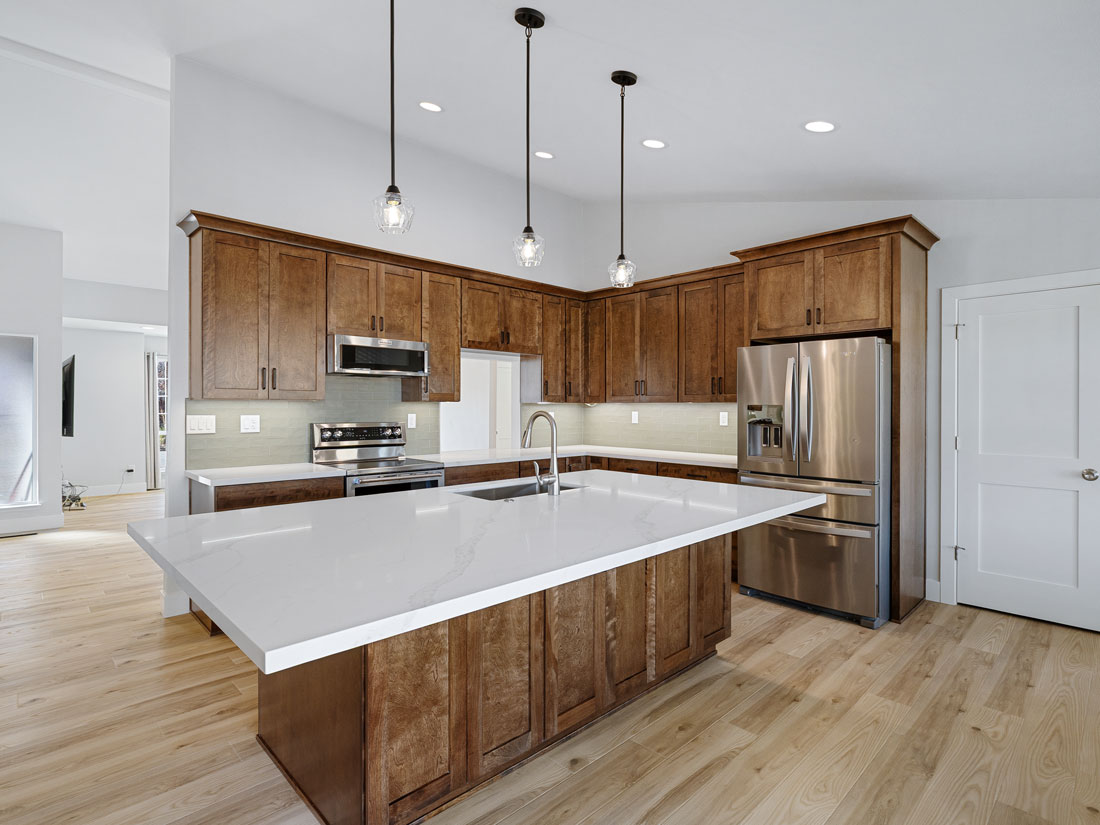
If you are researching prefab vs stick built construction, you have probably run into plenty of confident claims and very few straight answers. Factory builders promise speed and savings on prefab homes. Traditional builders promise craftsmanship and control. The truth sits in the middle, and it shifts with your lot, your budget, and your local building department. At Blue Cannon Builders, we handle new construction, custom tenant improvements, and remodels across Reno Nevada, and we get asked about prefab vs stick built almost every week. This guide breaks down what each method costs, how long each one really takes, and where quality differences show up years down the road.
What Prefab, Modular, and Stick Built Actually Mean
Terminology causes most of the confusion in the prefab vs stick built conversation. Prefab, short for prefabricated, is an umbrella term for any structure with components manufactured off site and assembled on your lot. It covers panelized walls, structural insulated panels, kit homes, HUD manufactured homes, and modular construction.
Modular is a specific category of prefab homes. Modular units arrive as volumetric boxes, often eighty to ninety percent complete, then are craned onto a permanent foundation and stitched together on site. Critically, modular homes are built to the same state and local building codes as any site built house, which is why the stick built vs modular comparison is fundamentally different from comparing a custom home to a HUD manufactured unit. When clients ask Blue Cannon Builders about stick built vs modular, that code distinction is the first thing we clarify.
Stick built, also called site built, means the structure is framed piece by piece on your property. Lumber, trusses, sheathing, and mechanical systems come together in place, in sequence, under your general contractor's supervision. When homeowners in Reno Nevada picture a custom home going up, this is it.
The Real Cost Comparison in Reno Nevada
Cost is where the prefab vs stick built debate usually starts, and where marketing gets loudest. On a square foot basis, prefab homes and modular packages often quote lower than site built construction. Factory production reduces waste, keeps labor indoors and scheduled, and eliminates weather delays. Those efficiencies are real.
What those quotes exclude is everything that happens on your dirt. Land, geotechnical work, grading, utilities, septic or sewer, driveway, foundation, crane and transport, on site finish work, and permit fees are usually separate line items. Transport and crane costs alone climb quickly when a module has to travel over the Sierra or navigate tight streets in older Reno Nevada neighborhoods. By the time a modular package is delivered, set, finished, and connected, the savings over a comparable site built home often narrow to somewhere between zero and fifteen percent rather than the forty percent some advertisements suggest.
Stick built pricing works in the opposite direction. It is more transparent up front, because a local contractor prices the entire project with site work included, but it carries more exposure to labor availability and material market swings during the build. The honest answer on stick built vs modular cost is that the two land closer together than most people expect, and the deciding factor is usually site complexity. Flat, serviced infill lots favor the economics of prefab homes. Steep, remote, or heavily engineered lots erase that advantage entirely.
Timelines: Factory Speed Versus Site Reality
Speed is the strongest argument for prefab homes. Because factory production and site work happen simultaneously, a modular build can compress the construction calendar significantly. While your foundation is poured in Reno Nevada, modules are framed, wired, and drywalled in a plant hundreds of miles away. Once they arrive, the structure can be weathertight in days.
That advantage comes with two caveats worth understanding before you commit to prefab vs stick built. First, factory production slots are scheduled, not instant. Depending on the manufacturer and season, you may wait months just to enter the production queue, which quietly erases part of the calendar advantage. Second, design changes after production begins range from expensive to impossible. Prefab timelines assume every decision is locked early.
Stick built construction runs longer on paper. A custom home in Northern Nevada typically takes nine to sixteen months from groundbreaking to certificate of occupancy, and winter weather at our elevation can stretch that window. In exchange, you get flexibility. A wall can move, a window can grow, and a client who falls in love with a different kitchen layout in month four is not out of luck. In the stick built vs modular timeline comparison, modular usually wins on total duration while site built wins on adaptability.
Quality, Durability, and High Desert Performance
Quality is where the prefab vs stick built argument becomes least useful as a generalization, because the builder matters far more than the method. A well-executed modular home from a reputable plant will outperform a rushed site built house in Reno Nevada, and a carefully framed custom home will outperform a bargain factory package every time.
There are real structural differences worth knowing. Prefab homes in modular form are engineered to survive highway transport and craning, which often means heavier framing, additional fasteners, and more rigid assemblies than code minimum. Lumber also never sits in rain or snow, and inspections happen indoors rather than on a windy jobsite.
Site built construction wins on integration and correction. Every seam, flashing detail, and mechanical penetration is installed in place, which matters in a climate with wide temperature swings, snow load, and seismic considerations. Marriage lines where modules join are the most common source of long term issues in modular projects when they are not detailed and sealed properly. Stick built framing also allows deeper wall cavities, custom rooflines, and thermal detailing tuned to Reno Nevada conditions rather than to a standardized factory package. That is the quality nuance most stick built vs modular comparisons leave out.
Permitting and Resale Considerations in Northern Nevada
Jurisdiction matters. Reno, Sparks, Washoe County, and Carson City each handle plan review and inspections differently, and prefab homes require coordination between the manufacturer's state approved plans and your local site permits. Setback, height, and design review rules still apply regardless of method, and Blue Cannon Builders manages that process on every project.
For resale and appraisal, modular and site built homes on permanent foundations are treated as real property and appraise comparably. HUD manufactured homes are the exception and follow different lending, depreciation, and placement rules. If financing and long term value are priorities, that distinction matters more than any other detail in the prefab vs stick built decision.
Which Approach Fits Your Project
Choose prefab homes when your lot is straightforward, your schedule is tight, your design is conventional, and you are comfortable locking decisions early. Choose stick built when your site is complex, your design is genuinely custom, you want an ADU or barndominium tailored to your property, or you value the ability to adapt mid build. Many Blue Cannon Builders clients land on a hybrid, using panelized components or factory built trusses within a site built project to capture efficiency without surrendering control. There is no universal answer to prefab vs stick built, only the right answer for your lot, timeline, and budget.
Build with Blue Cannon Builders
Blue Cannon Builders is a full service construction company serving Reno Nevada and Northern Nevada with new construction, custom tenant improvements, remodels, ADUs, and barndominiums. Founded by Reno native Pete Lazzari, Blue Cannon Builders brings technical expertise, transparent pricing, and a genuine commitment to craftsmanship to every project. If you are still weighing prefab vs stick built, or working through a stick built vs modular decision for your next build, we will walk you through the numbers honestly, including the cases where prefab homes are the smarter call. Reach out through our contact page and let us get started on your project.